

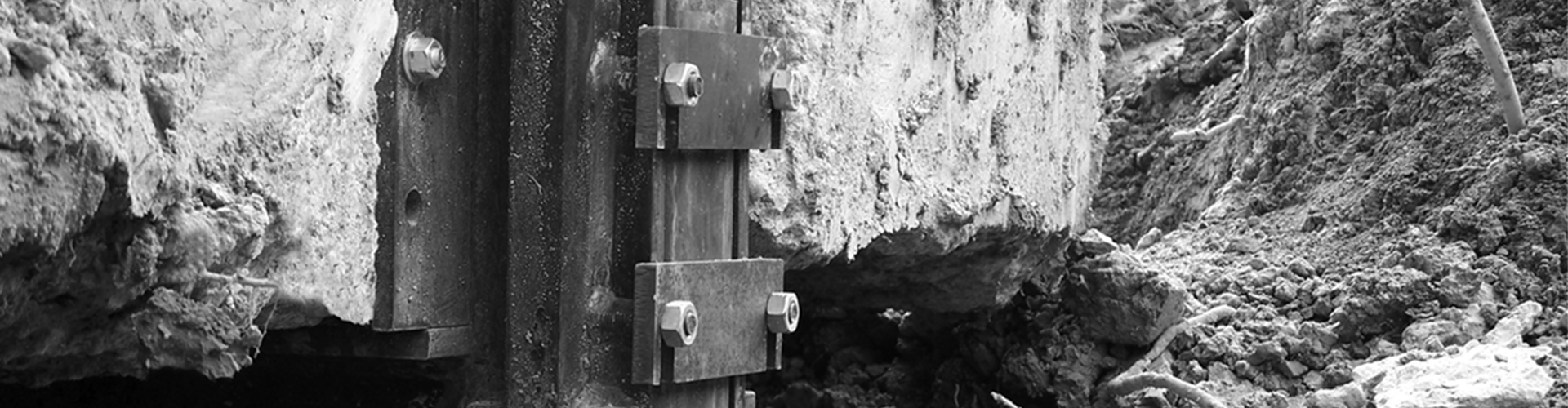
Helical Anchors for Repair Applications
In construction, underpinning is the process of strengthening and stabilizing the foundation of an existing building or other structure. In the utility industry common applications include substation platforms, equipment pads and existing structures. Underpinning may be necessary for a variety of reasons:
- The original foundation is simply not strong or stable enough
- The usage or loads of the structure has changed
- The properties of the soil supporting the foundation may have changed (possibly through subsidence) or were mischaracterized during design
- The construction of nearby structures necessitates the excavation of soil supporting existing foundations
- It is more economical, due to land price or otherwise, to work on the present structure's foundation than to build a new one
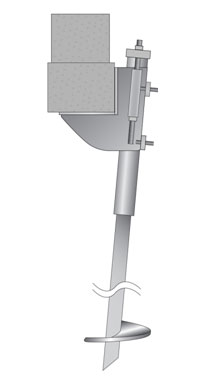
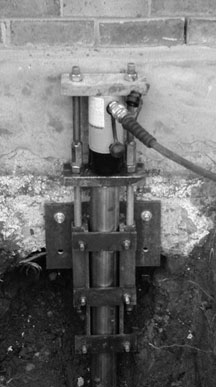
Underpinning is accomplished by extending the foundation in depth or width so it either rests on a more supportive soil stratum or distributes its load across a greater area. Underpinning a foundation generally requires a steel bracketing system to connect the helical pile to the existing foundation. Foundation brackets come in many styles and configurations depending on structural requirements. Engineered eccentric brackets are the most common style of underpinning bracket. These brackets are engineered to be placed along the side of the foundation and transfer the foundations load to the pile member. This type of bracketing system can support ultimate loads of over 100kips.
As the above definition of underpinning states, "Underpinning is accomplished by extending the foundation in depth or width...", the goal is to develop load bearing on deeper or more stable soils. ECP has developed and patented several styles of piling systems to meet this requirement. Steel piling systems allow contractors to move beyond active soils that can move with fluctuations in temperature or moisture levels. Being able to get past these active soils is the key to permanently underpinning a structure.
Once the foundation repair piles are installed, often times, there becomes a need to lift the structure back to designed elevation. Lifting a structure is a very complicated and delicate process that should only be attempted by a trained foundation repair expert. ECP recommends that a registered professional engineer monitors all structural activities. Most engineering firms require that a structural lift only be performed with a hydraulic manifold system. ECP has developed the most extensive manifold lifting system in conjunction with Enerpac hydraulic equipment. This lifting system was designed for the precise control and stability required during a structural lift.
