


Helical Anchors 1-3/4" Square Shaft
|
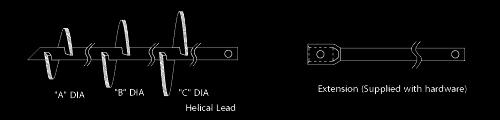
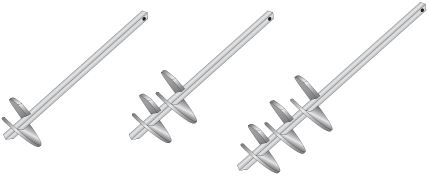
1-3/4" 100,000# Tension Helical Anchors
|
||||||||||||||
|
Part #
|
Size
|
Length
|
# Helix
|
Helix Diameter
|
||||||||||
|
Leads
|
||||||||||||||
|
1-3/4"
|
36"
|
2
|
8",10"
|
|||||||||||
|
1-3/4"
|
42"
|
2
|
10",12"
|
|||||||||||
|
1-3/4"
|
60"
|
2
|
8",10"
|
|||||||||||
| TAF-175-60 (10,12) |
1-3/4"
|
60"
|
2
|
10",12"
|
||||||||||
| TAF-175-66 (8,10,12) |
1-3/4"
|
66"
|
3
|
8",10",12"
|
||||||||||
| TAF-175-84 (8,10,12) |
1-3/4"
|
84"
|
3
|
8",10",12"
|
||||||||||
| TAF-175-84 (10,12,14) |
1-3/4"
|
84"
|
3
|
10",12",14"
|
||||||||||
| TAF-175-126 (8,10,12,14) |
1-3/4"
|
126"
|
4
|
8",10",12",14"
|
||||||||||
|
TAF-175-126 (10,12,14,14)
|
1-3/4"
|
126"
|
4
|
10",12",14",14"
|
||||||||||
|
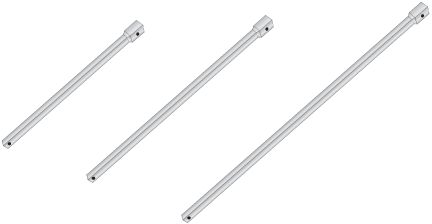
1-3/4" Helical Extensions
|
||||||||||||||
|
Part #
|
Size
|
Length
|
# Helix
|
Helix Diameter
|
||||||||||
|
Extensions
|
||||||||||||||
|
1-3/4"
|
42"
|
0
|
NA
|
|||||||||||
|
1-3/4"
|
60"
|
0
|
NA
|
|||||||||||
|
1-3/4"
|
84"
|
0
|
NA
|
|||||||||||
|
1-3/4"
|
42"
|
1
|
14"
|
|||||||||||
|
1-3/4"
|
60"
|
1
|
14"
|
|||||||||||
| TAE-175-60 (12,14) |
1-3/4"
|
60"
|
2
|
12",14"
|
||||||||||
|
TAE-175-84 (12,14)
|
1-3/4"
|
84"
|
2
|
12",14"
|
||||||||||
Note: Products Listed Above Are Standard Items And Are Usually Available From Stock
See page 11 - "How to Specify Special Order Torque Anchors™ for Specialized Configurations - Allow Extra Time For Processing.
All Helical Plates Are Spaced At Three Times The Diameter Of The Preceding Plate
Effective Length Of Extension Is 3" Less Than Overall Dimension Due to Coupling Overlap
All Product Hot Dip Galvanized Per ASTM A123 Grade 100
Shaft Weight per Foot - 10.4 lb/ft.
* "H" before part designation indicates helical plate thickness of 1/2 inch instead of standard 3/8"
|
Table 2 - Capacities of ECP Helical Torque Anchors™
|
|||||
|
Shaft Size
|
Installation Torque Factor (k)
|
Axial Compression Load Limit
|
Ultimate-Limit Tension Strength
|
Useable Torsional Strength
|
Practical Load Limit Based Torsional Strength
|
|
9 - 11
|
70,000 lb.
|
70,000 lb.
|
7,500 ft-lb
|
Load limited to the rated capacity of the attachments and the lateral soil strength against the shaft
|
|
|
9 - 11
|
100,000 lb.
|
100,000 lb.
|
10,000 ft-lb
|
||
|
10 - 12
|
200,000 lb.
|
200,000 lb.
|
23,000 ft-lb
|
||
|
8 - 9
|
100,000 lb.
|
100,000 lb.
|
9,500 ft-lb
|
80,000 lb
|
|
|
7 - 8
|
115,000 lb.
|
120,000 lb.
|
13,000 ft-lb
|
97,000 lb
|
|
|
6 - 7
|
160,000 lb.
|
160,000 lb.
|
22,000 ft-lb
|
143,000 lb
|
|
The designer should select a product that provides adequate additional torsional
capacity for the specific project and soil conditions.
IMPORTANT NOTES:
The capacities listed for Axial Compression, Tension and Torsion in Table 2 are mechanical ratings. One must understand that the actual installed load capacities for the product are dependent upon the actual soil conditions on a specific job site. The shaft "Useable Torsional Strengths" given here are the maximum values that should be applied to the product. Furthermore, these torsional ratings assume homogeneous soil conditions and proper alignment of the drive motor to the shaft. In homogeneous soils it might be possible to achieve up to 95% or more of the "Useable Torsional Strength" shown in Table 2. In obstruction-laden soils, torsion spikes experienced by the shaft may cause impact fractures of the couplings or other components. Where impact loading is expected, reduce shaft torsion by 30% or more from "Useable Torsional Strength" depending upon site soil conditions to reduce chance of fracture or damage. Another advantage of selecting a torsional rating below the values shown in Table 2 is that one may be able to drive the pile slightly deeper after the torsional requirements have been met, thus eliminating the need to cut the pile shaft in the field.
The load transfer attachment capacity must be verified for the design. Standard attachments and ratings are shown on the following pages. Special configurations to fit your project can be fabricated to your specifications upon request.
ECP Utility is a top producer of 1-3/4" helical anchors in the United States. Known as the workhorse of the Utility Industry, the 1-3/4" square shaft is employed on heavy duty guy applications. Our Engineering, design and production capabilities of helical anchors, piles and anchors have become the standard in the industry.
ECP Utility offers 1-3/4" RCSB Helical Anchors for many applications including:
- 100,000# Capacity
- Guy Anchors
- New Construction
- Foundation Repair
- Tension Applications
- Shoring
- Soil Nails
- Tie Downs
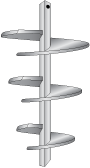
Square shaft helical anchors, also known as screw piles, screw anchors and torque anchors are ideal for applications where there is a need to resist both tension and axial compressive forces. Examples of these include expansive clay soils, metal buildings, telecommunication towers and canopies. 1-3/4" RCSB helical anchors are easy to install, can be installed in limited spaces and can be loaded or tested immediately upon installation making them very unique to the deep foundation industry.
Many times 1-1/2" helical anchors are the best solution for your project due to one of the following factors:
- Ease of Installation
- Little to No Vibration
- Immediate Load Transfer upon Installation
- Installed Torque Correlates to Capacity
- Easily Load Tested to Verify Capacity
- Installs Below Active Soils
- All Weather Installation
- Little to No Disturbance to Jobsite
Helical Ground Anchors are designed and sized to match load requirements, soil conditions and available site access. There may be one or multiple guy wires that can be resisted by one or multiple ECP Utility 1-3/4" square shaft guy wire anchors, dictated by design and load requirements. Helical guy anchors can be used to resist mast and tower loads which consist of lateral and compressive loads focused at the base of the structure. No matter the application ECP Helical Guy Anchors are the Designed and Engineered to Perform product of choice for the utility industry.
The electric transmission industry has relied on helical anchors for guy anchors for many years. Being the largest consumer of helical anchors the electric power transmission industry has embraced 1-3/4" helical anchors for their many benefits and reliable performance.
